Choosing the right toys for children can feel exciting, but it can also feel overwhelming. With so many options available, parents, grandparents, and gift-givers may wonder which toys are fun, safe, useful, and age-appropriate. The best toys do more than keep kids entertained. They support learning, creativity, movement, emotional growth, and problem-solving skills.
Children grow quickly, and their needs change at every stage. A toy that is perfect for a baby may not interest a toddler, while a toy designed for older children may be too advanced for a preschooler. The key is to choose toys that match a child’s age, abilities, interests, and stage of development.
The right toy should encourage curiosity without causing frustration. It should be safe enough for the child’s age and engaging enough to keep their attention. Whether you are shopping for a newborn, toddler, preschooler, or older child, understanding what kids need at each stage can help you make better choices.
Toys for Babies: Birth to 12 Months
During the first year of life, babies are learning about the world through their senses. They explore by looking, touching, listening, reaching, and eventually putting things in their mouths. At this stage, toys should be soft, safe, easy to clean, and simple to hold.
For newborns, high-contrast toys, soft rattles, plush animals, and gentle musical toys can be great choices. Babies are drawn to faces, bright colors, soft textures, and soothing sounds. As they grow, they begin reaching for toys, shaking them, grasping them, and exploring different textures.
Tummy time toys are especially helpful for babies. Soft mats, baby-safe mirrors, and lightweight toys can encourage babies to lift their heads, strengthen their neck muscles, and practice movement. Teething toys can also be useful as babies begin to chew and soothe their gums.
When choosing toys for babies, safety is the top priority. Avoid toys with small parts, loose buttons, sharp edges, long strings, or pieces that could break off. Babies naturally explore with their mouths, so toys should be large enough that they cannot be swallowed.
Great toy options for babies include soft blocks, textured balls, stacking rings, cloth books, rattles, activity gyms, teething toys, and soft sensory toys.
Toys for Toddlers: Ages 1 to 3
Toddlers are busy, curious, and full of energy. They are learning to walk, climb, stack, sort, push, pull, and communicate. At this stage, toys should encourage movement, hands-on discovery, and early problem-solving.
Toddlers love toys that let them feel independent. Push toys, pull toys, ride-on toys, shape sorters, stacking cups, chunky puzzles, and building blocks are great choices. These toys help toddlers develop balance, coordination, fine motor skills, and confidence.
Pretend play also begins to grow during the toddler years. Simple pretend toys like play phones, toy kitchens, baby dolls, stuffed animals, toy cars, and pretend food can help toddlers copy the world around them. This kind of play supports language development and imagination.
Art supplies can also be introduced during this stage, as long as they are washable and toddler safe. Large crayons, finger paints, and chunky markers can help toddlers explore color and creativity.
Toddlers often enjoy repetition. They may want to stack the same cups over and over or read the same book every day. This repetition is part of how they learn. Choose toys that can be used in different ways so the child can return to them again and again.
Great toy options for toddlers include shape sorters, nesting cups, large blocks, musical instruments, toy animals, pretend food, simple puzzles, bath toys, ride-on toys, and board books.
Toys for Preschoolers: Ages 3 to 5
Preschoolers are imaginative, social, and eager to learn. They enjoy asking questions, making up stories, building things, dressing up, and pretending. At this stage, toys should encourage creativity, communication, early learning, and hands-on exploration.
Pretend play is especially important for preschoolers. Dress-up clothing, play kitchens, doctor kits, tool sets, dolls, action figures, and playhouses allow children to create stories and practice real-life situations. This helps build language skills, empathy, and social understanding.
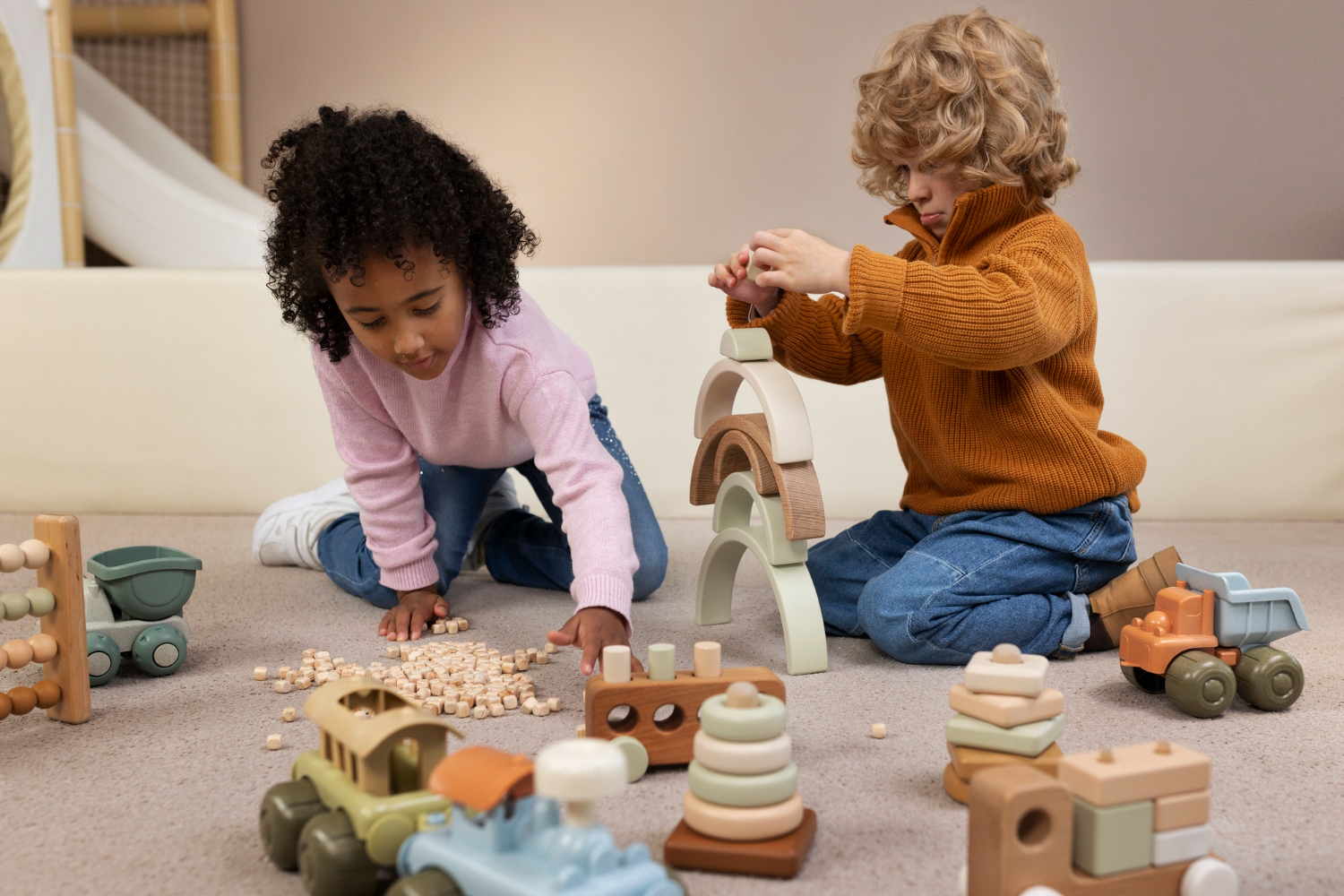
Preschoolers also enjoy building and creating. Blocks, magnetic tiles, art kits, modeling dough, craft supplies, and beginner construction sets can keep them engaged while helping them develop problem-solving skills. These toys allow children to experiment, make choices, and use their imagination.
Early learning toys can also be helpful, but they should still feel playful. Alphabet puzzles, counting games, matching cards, memory games, and simple board games can introduce letters, numbers, colors, shapes, and turn-taking.
Outdoor toys are also great for preschoolers. Balls, scooters, sand toys, gardening sets, water tables, and climbing toys help kids build strength and coordination while burning energy.
Great toy options for preschoolers include dress-up sets, pretend play kits, puzzles, building tiles, art supplies, beginner board games, outdoor toys, musical toys, and storytelling sets.
Toys for Early School-Age Kids: Ages 5 to 8
Children between 5 and 8 are developing stronger interests, longer attention spans, and more advanced thinking skills. They may enjoy toys that challenge them, teach new skills, or allow them to create something from start to finish.
At this stage, kids often enjoy construction toys, science kits, craft sets, sports equipment, puzzles, board games, and imaginative play sets. They are ready for toys with more steps, rules, and goals.
Building toys are excellent for this age group because they support planning, patience, and problem-solving. Kids may enjoy creating vehicles, buildings, animals, or fantasy worlds. Art kits, jewelry-making kits, painting sets, and drawing supplies are also great for self-expression.
Games become more exciting at this age because children can better understand rules and strategies. Board games, card games, and memory games help with patience, focus, teamwork, and healthy competition.
Science and discovery toys are also a strong choice. Magnifying glasses, beginner experiment kits, nature exploration sets, and simple robotics toys can encourage curiosity and critical thinking.
Great toy options for early school-age kids include building sets, science kits, craft kits, puzzles, board games, sports gear, outdoor exploration toys, pretend play sets, and beginner STEM toys.
Toys for Older Kids: Ages 8 to 12
Older children are more independent and often have clear hobbies and interests. Some may love art, while others enjoy sports, technology, music, reading, science, building, or strategy games. At this stage, toys should encourage deeper thinking, creativity, confidence, and skill building.
Kids in this age range may enjoy more advanced building sets, art supplies, model kits, science experiments, coding toys, strategy games, sports equipment, musical instruments, and creative writing tools. They may also enjoy toys that let them work on longer projects over time.
Strategy games and puzzles are great for older kids because they encourage planning, patience, and decision-making. More detailed craft kits can help children develop focus and pride in their work. Sports and outdoor equipment can help support physical health and teamwork.
Older kids may also enjoy toys and activities that connect to real-world skills. Cooking kits, photography tools, beginner sewing kits, gardening supplies, and educational tech toys can make learning feel practical and exciting.
When choosing toys for older kids, consider their personality. A quiet child may enjoy art, books, puzzles, or model building. An active child may prefer sports, outdoor gear, or movement-based games. A curious child may love science kits, building challenges, or discovery tools.
Great toy options for older kids include strategy games, advanced building sets, STEM kits, art sets, sports equipment, musical instruments, craft projects, puzzles, and hobby-based kits.
Think About Safety First
No matter the child’s age, safety should always come first. Always check the recommended age range on toys before purchasing. Age labels are not just about difficulty. They also help identify possible safety concerns, such as small parts or materials that may not be suitable for younger children.
For babies and toddlers, avoid small pieces that could become choking hazards. For all ages, check that toys are sturdy, smooth, and made from safe materials. Battery compartments should be secure, and toys with magnets should be handled carefully.
It is also important to consider the child’s environment. If younger siblings are in the home, avoid toys with tiny parts that could be left on the floor. Store toys properly and inspect them regularly for broken pieces.
Choose Toys That Grow with the Child
Some of the best toys are open-ended, meaning they can be used in many different ways. Blocks, pretend play sets, dolls, art supplies, building tiles, and outdoor toys can grow with a child because they allow new levels of creativity as the child develops.
For example, a toddler may simply stack blocks, while a preschooler may build a house, and an older child may create an entire city. Open-ended toys often provide more long-term value because children can return to them at different ages.
Balance Fun and Learning
Educational toys can be wonderful, but toys do not have to be labeled “educational” to support learning. A ball teaches coordination. Blocks teach balance and problem-solving. Dolls and stuffed animals support emotional development. Art supplies build creativity. Board games teach patience and cooperation.
The best toys combine fun and learning naturally. Children are more likely to stay engaged when they feel excited, curious, and free to explore.
Final Thoughts
Choosing the right toys for every age does not have to be complicated. Start by thinking about the child’s age, safety needs, interests, and stage of development. Babies need sensory toys that are soft and safe. Toddlers need toys that encourage movement and exploration. Preschoolers need creative and pretend play options. School-age children need activities that challenge their growing skills. Older kids need toys that support hobbies, independence, and deeper learning.
The right toy can spark imagination, build confidence, and create meaningful moments of play. When chosen thoughtfully, toys become more than simple entertainment. They become tools for growth, discovery, and joyful childhood memories.